In 2026, workplace style feels more flexible, but business casual still requires judgment. The question “what is business casual for men” has no single answer for every office. A reliable definition combines polished basics, comfortable fabrics, and awareness of workplace expectations. Think of a soft-shouldered navy blazer, an Oxford shirt, tailored chinos, and clean leather loafers. These pieces look professional without appearing overly formal. Fit matters more than expensive labels. A shirt collar should sit neatly, while trousers should break lightly above the shoe. Small details matter.
Avoid extremes.
A wrinkled shirt can weaken an otherwise thoughtful outfit. So can athletic sneakers, loud logos, or jeans with heavy fading. Yet modern offices may welcome refined sneakers, knit polos, or dark denim. The setting changes the standard. A technology studio may accept minimal trainers, while a client meeting may call for derbies and a structured jacket. This guide will explore those differences through practical examples, current styling habits, and dependable wardrobe principles. It will consider seasonal fabrics, color combinations, grooming, accessories, and dress expectations across industries. There is room for personal expression, but comfort should not become carelessness. The hardest part is often reading the room correctly. Dress slightly smarter when uncertain. Then observe the room. A thoughtful wardrobe should support confidence, movement, and credibility throughout the day. It may not always look perfect, and that is worth recognizing. Clothing advice can simplify decisions, but real workplaces remain unpredictable.
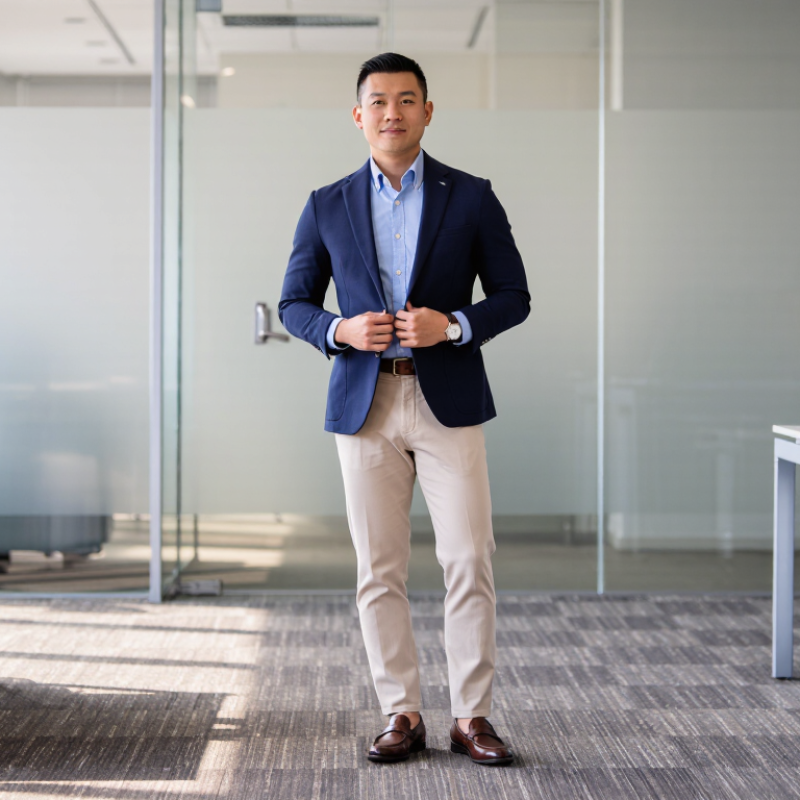
Defining Business Casual for Men in 2026 means balancing authority with ease. Gallup’s 2024 workplace report found that 53% of remote-capable U.S. employees work in hybrid roles. Clothing must now move from video calls to office meetings without looking forced.
A practical outfit starts with a structured overshirt, fine-gauge knit, or unlined blazer. Add tailored trousers, dark chinos, or clean wool-blend pants. A button-down shirt remains reliable, but a plain knit polo can look equally professional.
Choose leather loafers, minimal derbies, or refined low-profile sneakers when the workplace allows them. Fit matters more than formality. A clean shoulder line and trousers resting neatly on the shoe create polish.
The 2024 State of Hybrid Work report from Owl Labs also reflects changing workplace expectations, with many employees dividing time between home and office. That shift makes interchangeable layers useful. Keep one jacket at work. Carry a spare shirt.
Avoid Avoid distressed denim, loud logos, and athletic shorts.
Adapt to the workplace Still, business casual has no universal rule. A creative studio may welcome sneakers, while a financial office may expect leather shoes.
I have found that overdressing slightly is safer on a first visit. But this advice can fail in relaxed teams. Observe the room, ask a trusted colleague, and adjust your next outfit.
In 2026, men’s business casual clothing should look polished without feeling overly formal. A reliable wardrobe starts with an unstructured blazer, a crisp shirt, tailored trousers, and clean leather shoes. A fine-gauge knit polo can replace a traditional shirt on warmer days. Choose trousers with a gentle taper, but leave enough room for comfortable sitting and walking. Core pieces should move with you.
Fabric choice often decides whether an outfit feels refined or careless. Wool blends resist wrinkles and regulate temperature well in offices with changing air conditioning. Cotton poplin feels crisp, while Oxford cotton offers a softer, more relaxed texture. Linen adds useful breathability, although it wrinkles quickly. That is not always a flaw. A little texture can make an outfit look lived-in. For frequent travel, consider wool, technical cotton, or blended fabrics with modest stretch. Avoid excessive shine, which can make inexpensive material look more obvious.
Fit remains more important than fabric labels. Shoulder seams should sit neatly, and shirt cuffs should show slightly beneath the jacket. Trousers should touch the shoe without folding heavily at the ankle. I still sometimes choose a fabric for appearance and regret it after several hours. Comfort changes posture, and posture changes how professional clothing appears. Check the garment under natural light before buying. Some colors look balanced indoors but unexpectedly harsh outside.
Business casual for men in 2026 depends less on strict rules and more on controlled combinations. In my fitting-room experience, a navy overshirt, pale blue shirt, and charcoal trousers create a dependable foundation. Keep one color dominant and let another provide contrast. Warm beige works well with olive, brown, and muted blue. Avoid combining several bright shades at once. The result can look energetic, but rarely looks intentional.
Patterns need breathing room. A fine-check shirt pairs naturally with solid trousers and a quiet jacket. If the shirt has visible stripes, choose a jacket with texture instead of another pattern. Small patterns usually appear more professional from a distance. Large checks can feel relaxed, especially in creative offices. I recommend checking the outfit in daylight, because indoor lighting can hide clashing undertones.
Layers should add structure, not bulk. A lightweight knit under an unlined jacket keeps the outfit comfortable during changing temperatures. Leave enough space around the collar and shoulders. Otherwise, the clothes look borrowed. A simple leather belt and clean shoes can connect separate colors without matching everything exactly. I still overmatch accessories sometimes, and the outfit becomes strangely rigid. Workplace expectations also differ, so observe how senior colleagues dress before taking risks. A polished combination may need one imperfect detail, such as rolled sleeves or a slightly softer fabric, to avoid looking rehearsed.
What Is Business Casual for Men in 2026?
Business casual now depends on polish, comfort, and workplace context. Footwear sets the tone before your shirt does. Choose clean leather loafers, plain derbies, or refined low-profile sneakers. They should be well-maintained, with no visible damage or distracting colors. Dark brown, black, and muted tan remain reliable choices. Match your shoes to the room, not only your trousers. A creative office may accept sneakers, while a client meeting usually requires a sharper finish. I have noticed that slightly formal shoes often make an ordinary outfit look intentional.
Accessories should support the outfit quietly. A simple watch, structured work bag, and restrained belt can show care without demanding attention. Your belt does not need to match your shoes perfectly, but similar color depth creates balance. Avoid overloaded pockets, oversized logos, and noisy jewelry. Small details matter. Grooming standards are equally visible. Keep hair controlled, facial hair shaped, nails clean, and fragrance subtle. Freshness matters more than a complicated routine. A wrinkled collar or dusty shoe can undo careful grooming, which is an easy mistake to underestimate.
Tips: Inspect your shoes under bright light before leaving. Carry a lint roller when commuting. Use fragrance sparingly, especially in shared offices. Check your reflection from the side, not only the front. Some workplaces still interpret “casual” differently, so observe colleagues before relaxing your standards. I sometimes overcorrect and dress too formally; that can feel distant. The better goal is prepared, approachable, and quietly consistent.
A practical weekly benchmark for footwear, accessories, and grooming standards.
The baseline prioritizes polished closed-toe footwear, restrained accessories, and consistent personal grooming. Values represent a practical number of ready-to-use items or weekly maintenance checks for a standard five-day workweek.
Business casual in 2026 depends less on fashion and more on workplace expectations. A finance office may require a pressed shirt, tailored trousers, and leather shoes. A creative studio may accept dark jeans, a fine-knit polo, and clean minimalist sneakers. Check the employee handbook before your first day. Ask a manager when the language feels vague.
Hybrid work has made this decision harder. Gallup’s 2024 workplace data shows that many employees with remote-capable jobs now split time between home and the office. Your outfit must handle both settings. Choose a structured overshirt, breathable trousers, and a plain shirt that looks sharp on video. Keep a blazer nearby for client calls. Small details matter.
Industry guidance often favors consistency over expensive clothing. The U.S. Bureau of Labor Statistics continues to show that professional and business services employ millions of workers, but those workplaces do not share one dress standard. That difference is easy to overlook. A useful test is simple: can you meet a client, join a team lunch, and walk through a warm commute comfortably? If not, adjust one piece. Avoid loud logos, wrinkled fabrics, and athletic footwear with visible wear. I still think some offices define “casual” poorly. When expectations conflict, clean, slightly formal clothing remains the safer choice.
| Workplace Setting | Formality Level | Recommended Tops | Recommended Trousers | Shoes | Suitable Colors | Items to Avoid | Practical Notes |
|---|---|---|---|---|---|---|---|
| Traditional Office | More Formal | Long-sleeve button-down shirt, Oxford shirt, fine-gauge knit, or an unstructured blazer over a collared shirt. | Wool trousers, tailored chinos, or pressed dress trousers with a clean break at the shoe. | Leather derby shoes, loafers, monk-strap shoes, or simple dress boots. | Navy, charcoal, medium blue, white, pale blue, beige, and muted brown. | Graphic T-shirts, distressed denim, athletic shoes, shorts, and visibly wrinkled clothing. | When the policy is unclear, dress one level more formally for meetings, interviews, and presentations. |
| Finance, Legal, or Client-Facing Office | More Formal | Pressed collared shirt with a conservative blazer or tailored jacket; a tie may be appropriate for high-stakes meetings. | Matching tailored trousers or dark, unembellished chinos when the workplace permits them. | Polished leather oxfords, derbies, loafers, or discreet dress boots. | Charcoal, navy, white, light blue, and other low-contrast neutral combinations. | Bright novelty patterns, casual sandals, heavily worn shoes, and denim with fading or rips. | Client expectations often matter more than the general office rule; keep accessories understated and professional. |
| Corporate Hybrid Office | Moderate | Button-down shirt, polo shirt, merino sweater, or a neat overshirt layered over a plain T-shirt. | Tailored chinos, wool-blend trousers, or dark, clean denim if explicitly accepted. | Loafers, minimal leather sneakers, derby shoes, or clean leather boots. | Navy, olive, stone, gray, white, light blue, and other coordinated neutrals. | Sweatpants, gym clothing, novelty logos, visibly dirty sneakers, and overly loose silhouettes. | Keep a blazer or smart jacket available for video calls, leadership meetings, and unexpected visitors. |
| Technology or Creative Office | More Relaxed | High-quality plain T-shirt, knit polo, casual button-down, textured overshirt, or lightweight sweater. | Dark denim, chinos, relaxed tailored trousers, or clean utility-inspired trousers without excessive pockets. | Minimal leather or canvas sneakers, loafers, chukka boots, or clean casual boots. | Black, navy, gray, cream, forest green, rust, and other controlled accent colors. | Clothing with stains, offensive graphics, torn garments, beachwear, and clothing that appears intended for exercise. | Personal style is usually more accepted, but fit, cleanliness, and appropriateness for visitors still matter. |
| Startup or Small Business | Relaxed to Moderate | Polo shirt, casual Oxford shirt, plain T-shirt under a jacket, cardigan, or clean overshirt. | Chinos, dark denim, corduroy trousers, or relaxed tailored trousers. | Clean sneakers, loafers, desert boots, or simple leather boots. | Earth tones, navy, gray, white, denim blue, and subtle seasonal colors. | Formal business suits worn without context, worn-out loungewear, flip-flops, and clothing with large slogans. | Choose practical clothing that works for collaboration, commuting, and occasional external meetings. |
| Retail, Hospitality, or Front Desk | Moderate | Collared shirt, neat polo, fine-knit sweater, or coordinated shirt-and-jacket combination. | Pressed chinos, tailored trousers, or dark, clean denim where permitted. | Closed-toe loafers, derbies, clean plain sneakers, or comfortable dress shoes with good support. | Dark neutrals, white, light blue, beige, and colors that coordinate with the workplace environment. | Open-toe footwear where unsafe, distressed clothing, strong fragrances, and garments that restrict movement. | Prioritize comfort, mobility, stain resistance, and a polished appearance because the role involves frequent public contact. |
| Education or Nonprofit Workplace | Moderate | Button-down shirt, polo, sweater, cardigan, or casual blazer depending on the audience and event. | Chinos, corduroy trousers, dark denim, or practical tailored trousers. | Loafers, derbies, clean sneakers, or supportive casual boots. | Navy, gray, tan, olive, burgundy, and other approachable colors. | Overly formal eveningwear, ripped clothing, beachwear, and footwear unsuitable for standing or walking. | For ceremonies, interviews, or formal presentations, add a blazer and choose polished shoes. |
| Remote or Video-First Work | Moderate | Collared shirt, knit polo, sweater, or structured overshirt that looks polished on camera. | Comfortable chinos, tailored trousers, or clean dark denim for in-person occasions. | Not always visible on camera; use loafers, clean sneakers, or comfortable smart shoes for office visits. | Solid mid-tone colors that contrast with the background, such as blue, gray, green, or beige. | Distracting patterns, poorly fitted tops, sleepwear, and clothing that appears casual even when the camera angle changes. | Check lighting and framing; avoid bright white tops or tiny patterns that may appear harsh on video. |
| Outdoor, Field, or Practical Office | Function-First | Durable polo, breathable button-down shirt, overshirt, or lightweight weather-resistant layer. | Stretch chinos, durable trousers, or clean dark workwear-style pants appropriate to the task. | Supportive closed-toe shoes or boots with suitable traction and protection for the environment. | Khaki, navy, olive, gray, brown, and other colors that conceal ordinary dust or light marks. | Fragile fabrics, open-toe shoes, restrictive tailoring, dangling accessories, and clothing unsuitable for safety requirements. | Follow site-specific safety rules first; business casual never overrides required protective equipment. |
It balances authority and comfort. Think structured layers, neat trousers, and polished shoes.
Try an unlined blazer, fine-gauge knit, or structured overshirt. Add tailored trousers, dark chinos, or wool-blend pants.
Not always. A plain knit polo can look professional when it fits well and stays wrinkle-free.
Leather loafers, simple derbies, and clean low-profile sneakers can work. Workplace expectations decide the safest option.
Choose clothes that move from video calls to office meetings. Keep a jacket nearby and carry a spare shirt.
No. A finance office may expect pressed shirts and leather shoes. A creative workplace may allow dark jeans and clean sneakers.
Prioritize fit over formality. Keep shoulders clean, trousers neat, and fabrics free from wrinkles.
Avoid distressed denim, loud logos, wrinkled fabrics, and worn athletic shoes. Athletic shorts usually look too relaxed.
Check the employee handbook or ask a manager. Slightly formal clothing is safer, though relaxed teams may prove this advice wrong.
Ask whether it suits a client meeting, team lunch, and warm commute. If not, change one piece. Keep it simple.
In 2026, what is business casual for men? It is a polished yet flexible way of dressing that balances professional presentation with everyday comfort. The foundation typically includes well-fitted chinos, tailored trousers, collared shirts, fine-gauge knitwear, unstructured jackets, and versatile overshirts. Breathable wool blends, cotton, linen blends, and performance fabrics can provide comfort while maintaining a neat appearance. Fit, condition, and coordination are more important than following a rigid uniform.
A successful business casual outfit combines neutral colors with tasteful accents, controlled patterns, and practical layers suited to the season. Clean leather or minimalist fabric shoes, a simple belt, a refined watch, and a functional work bag can complete the look without appearing excessive. Grooming should be tidy, including clean hair, trimmed facial hair, and well-maintained hands. Expectations vary by workplace: creative offices may allow more color and relaxed pieces, while corporate, client-facing, and traditional environments usually require sharper tailoring, conservative patterns, and more formal footwear.

CLStyle Fashion